

MARKET OVERVIEW


Grain markets traded in a relatively quiet and cautious tone this week overall following the volatility seen last week after the USDA WASDE report and Kansas Wheat Tour. Canadian markets were closed Monday for the Victoria Day long weekend, however U.S. futures rallied sharply to begin the week on reports that China could purchase roughly $17 billion of U.S. agricultural goods. The story injected some early optimism into wheat, corn and soybean markets while canola followed higher once Canadian trade resumed Tuesday morning.
As the week progressed though, markets lost momentum as traders reduced exposure heading into the upcoming U.S. Memorial Day long weekend. Outside commodity markets also softened with crude oil trading lower on growing expectations that an Iran deal could eventually bring additional oil supply back onto the market. That pressured energies and limited some broader enthusiasm across the commodity sector overall.
Weather and seeding progress continue to dominate overall market direction across Western Canada. Saskatchewan remains the most delayed province overall with many northern barley, oat, spring wheat and canola growing regions continuing to lag behind normal pace due to cool and wet conditions. Portions of the eastern Prairies also received additional showers overnight while forecasts for the week ahead call for warmer temperatures mixed with scattered thunderstorm activity.
The contrast between Saskatchewan and Alberta continues to be very noticeable. Alberta producers have generally made much stronger progress overall, particularly across southern and central growing regions where drier conditions allowed fieldwork to advance rapidly over the past two weeks. Saskatchewan on the other hand continues to battle more widespread delays, especially north of the Highway 16 corridor where excess moisture and cooler temperatures have slowed progress considerably. Manitoba also remains behind average pace in several regions.
Current Saskatchewan seeding progress sits well behind both last year and the five-year average with many crops only around one-third planted provincially. Barley, oats, canola and spring wheat remain notably delayed in the north and east regions of the province while southern and western regions have generally seen stronger advancement. Alberta overall remains much closer to normal pace with several major crops already surpassing the halfway point provincially.

The latest precipitation maps continue telling the story well. Large portions of Saskatchewan received meaningful moisture over the past seven days, particularly central and east-central regions. While moisture reserves are generally favorable heading into the growing season, producers are now reaching the stage where extended delays begin introducing concerns around shorter growing windows and increased frost risk later this fall if seeding pushes too far into June.
Wheat markets continue finding support from ongoing issues in the United States winter wheat crop. USDA winter wheat ratings remain historically poor with just 27% of the crop rated good to excellent, well below both last year and long-term averages. Kansas harvest will begin shortly and production concerns continue lingering following drought stress and spring frost events across portions of the southern Plains. Last week’s USDA WASDE report projecting the smallest U.S. wheat crop since 1972 continues to provide underlying support to wheat futures despite quieter trade this week overall.

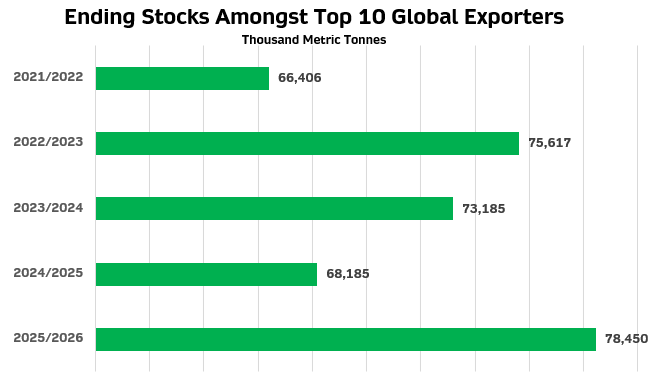
Minneapolis spring wheat futures have remained relatively firm near the upper end of recent trading ranges as the market balances delayed Canadian planting against improving weather forecasts heading into late May. European wheat values have also remained firm this week while global wheat stocks continue tightening modestly year over year.
Canola futures managed to hold modest gains this week despite softer crude oil values and quieter outside market direction. Delayed Canadian seeding continues offering some underlying support to the market, although global vegetable oil supplies remain relatively comfortable overall. European rapeseed and Malaysian palm oil markets also traded slightly firmer through the week helping support canola values.
Corn and soybean markets remain heavily focused on U.S. weather and Chinese demand headlines. U.S. planting progress overall remains favorable with crop emergence moving along quickly across much of the Corn Belt. Markets will increasingly shift toward summer weather risks over the next several weeks as crop establishment advances.
Overall, the market tone continues feeling cautious but weather sensitive. Traders remain hesitant to push markets aggressively higher without a stronger production threat, however delayed Canadian seeding progress combined with historically poor U.S. winter wheat conditions continues preventing major downside pressure from developing as well. The next two weeks will remain extremely important across Saskatchewan and Manitoba as producers attempt to make significant progress before calendar dates begin becoming a larger concern for yield potential and crop maturity timelines.

Canola


Planting delays are the major story in Canadian canola markets right now as much of the Highway 16 corridor through Saskatchewan and Manitoba continues falling behind normal pace. Northern Saskatchewan in particular remains at risk of pushing a meaningful amount of acreage beyond ideal planting windows if wet and cool conditions continue much longer. Forecasts are calling for warmer temperatures ahead, but scattered thunderstorm activity remains in the outlook as producers continue pushing aggressively to get crop in the ground.
Canola markets traded firmer earlier this week following strength in U.S. soybean oil and reports that China could purchase roughly $17 billion of U.S. agricultural goods. Canadian markets were closed Monday for the Victoria Day long weekend but canola picked up on the bullish tone Tuesday morning once trade resumed. Overall though, markets traded in a quieter and more cautious tone later in the week as traders reduced exposure ahead of the U.S. Memorial Day weekend.
Much of the support in canola continues coming from weather uncertainty, ongoing strength in soybean oil and lingering geopolitical risk premium tied to Middle East tensions and crude oil markets. Vegetable oil markets have closely followed energy markets for much of the spring. However, crude oil softened this week on increasing expectations that an Iran deal could eventually bring additional oil supply back onto the market. If outside market support fades and weather risk improves, some weather premium could slowly come out of canola values moving into June.
Old crop export pace continues running extremely strong and remains one of the more supportive stories in the market. Canadian canola exports are currently running on pace near 8.7 to 8.8 million tonnes for the crop year which is significantly above where early season expectations sat near 6 million tonnes. We continue carrying roughly an 8 million tonne export estimate as export movement typically slows seasonally through May and June, however overall demand has remained very impressive and continues tightening old crop carryout projections.
Domestic crush demand also remains a major supportive factor longer term. New crush capacity expected online over the next several years could push Canadian crush demand toward 13.5 million tonnes annually which significantly changes the long-term demand outlook for Canadian canola and lowers the risk of burdensome supplies building domestically.
Trade estimates also continue leaning toward slightly higher canola acreage this season with seeded area potentially increasing roughly 2% year over year. Final acreage will heavily depend on weather over the next two to three weeks, especially across northern Saskatchewan where delays remain most significant.
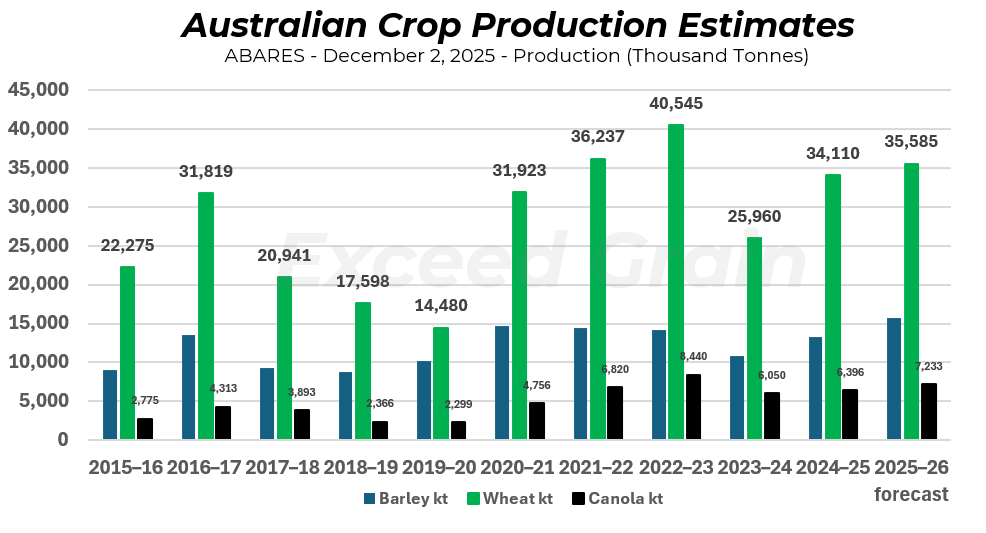
Australian canola production will remain another important factor to monitor. Conditions there have recently trended drier while fertilizer pricing and availability issues have also surfaced as planting progresses. At the current time however, Australian canola is not pricing competitively against Canadian origin into export markets which continues supporting Canadian export movement globally.
What to Watch For In Canola Markets:
- Canadian Planting Pace and Weather: Delays remain significant across northern Saskatchewan and parts of Manitoba with much of the Highway 16 corridor still behind normal pace. The next two weeks are critical as producers push to finish seeding before late planting risk becomes a larger concern. Forecasts are calling for warmer temperatures but scattered thunderstorm activity continues to create uncertainty.
- Crude Oil and Vegetable Oil Markets: Canola has continued riding strength in soybean oil and broader vegetable oil markets through much of the spring. However, crude oil softened this week on increasing expectations of a potential Iran deal. If energy markets continue weakening and weather risks improve, some premium could slowly come out of canola values.
- Canadian Export Pace: Old crop export movement continues running exceptionally strong with exports currently on pace near 8.7 to 8.8 million tonnes for the crop year. Continued strong movement could tighten old crop carryout further and keep nearby basis levels relatively well supported.
- Crush Demand and Basis Levels: Domestic crush demand remains very strong with processors continuing to secure summer coverage. Nearby crush programs are beginning to fill into later summer delivery windows while exporters continue competing aggressively for available tonnes.
- Canadian Canola Acreage: Trade estimates continue leaning toward slightly higher canola seeded area this season. However, final acreage will depend heavily on how quickly producers can advance planting progress across delayed northern regions over the next couple of weeks.
New Feature: Swipe right or left through the Interactive Charts Below:


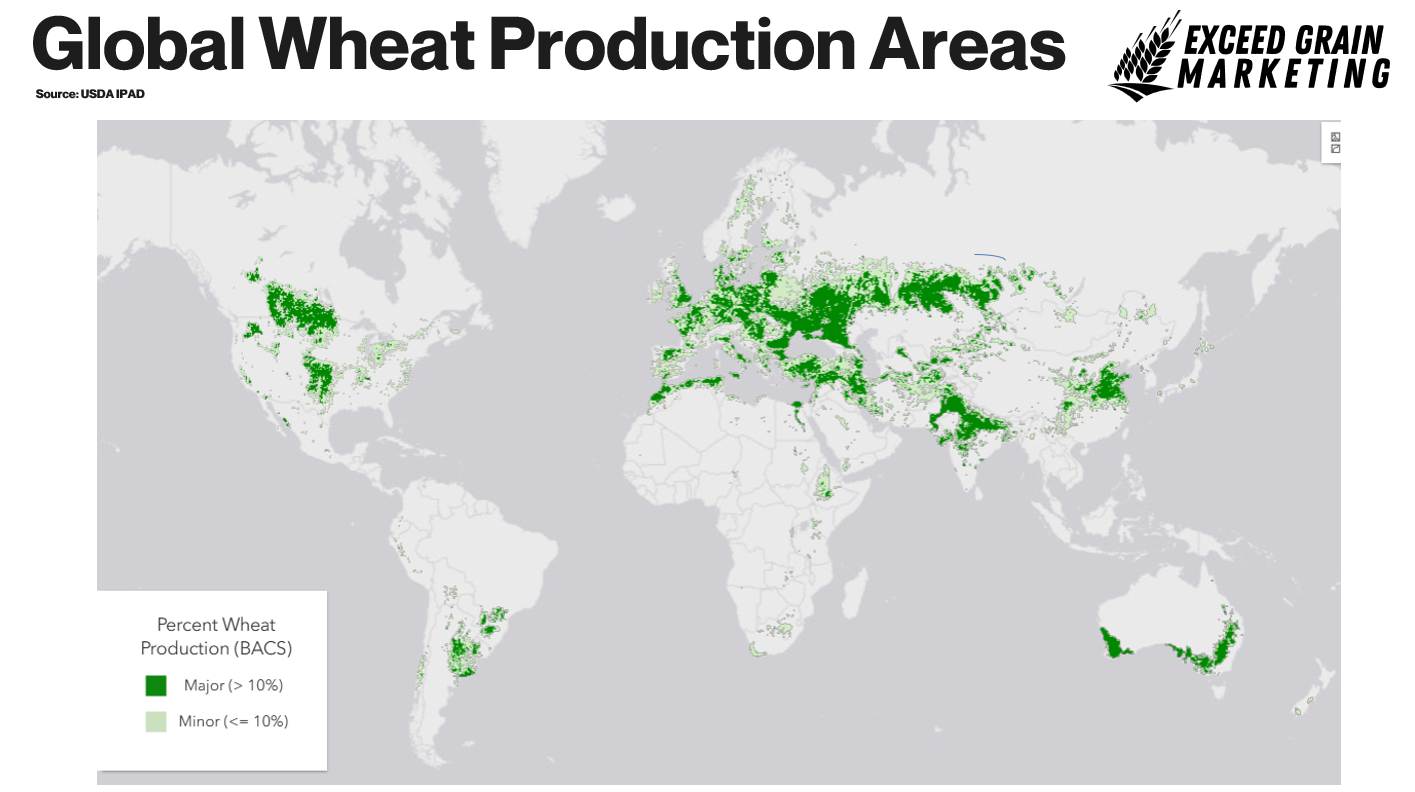
Spring Wheat + Durum Markets


Wheat markets traded in a quieter and more cautious tone overall this week following the sharp rally seen last week after the USDA WASDE report and Kansas Wheat Tour. Markets initially moved higher to begin the week after reports surfaced that China could purchase roughly $17 billion of U.S. agricultural goods, however enthusiasm faded as the week progressed with traders reducing risk heading into the U.S. Memorial Day long weekend.
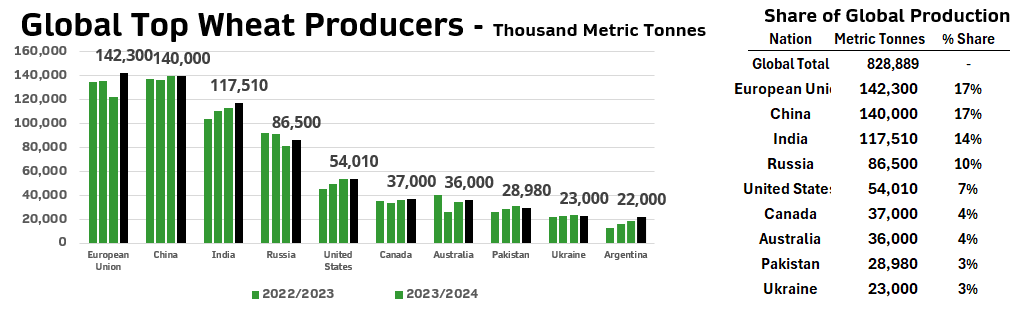
Underlying support in wheat continues coming from historically poor U.S. winter wheat conditions and tightening global balance sheets. USDA estimates continue pointing toward the smallest U.S. wheat crop since 1972 while Kansas harvest approaches quickly following another difficult growing season impacted by drought and frost concerns. Winter wheat ratings remain historically poor at just 27% good to excellent compared to a five-year average near 41%.
Spring wheat markets continue focusing heavily on Canadian planting progress. Saskatchewan remains the most delayed province overall with many northern spring wheat growing regions still significantly behind normal pace due to cool and wet conditions. Forecasts are calling for warmer temperatures moving forward, however scattered thunderstorm activity continues creating uncertainty around how quickly producers can advance seeding progress.
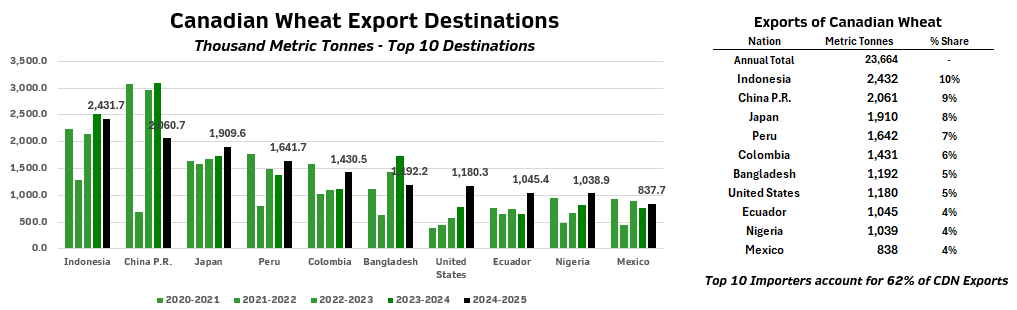
Cash wheat bids remain relatively strong across Western Canada with many central Saskatchewan spring wheat bids generally trading around or above the $8.00 per bushel range while portions of Alberta and Manitoba continue seeing opportunities closer to the $8.50 range depending on protein and delivery period. Canadian wheat export pace has slowed seasonally but remains roughly 5% ahead of last year overall. Elevators continue showing a stronger nearby appetite for canola movement recently as export demand for canola remains exceptionally strong, however wheat values have generally remained competitive enough to continue drawing tonnes when needed.
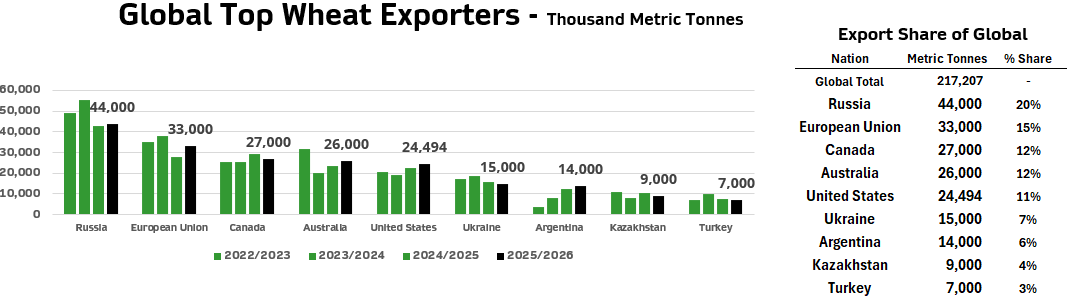
Canadian wheat also continues pricing competitively into global export channels compared to similar quality origins which has helped maintain relatively solid export movement despite increasing competition globally.
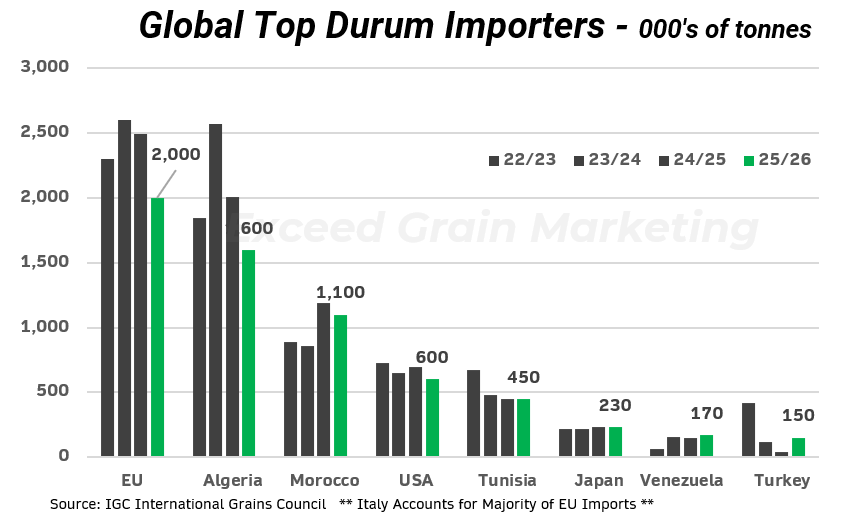
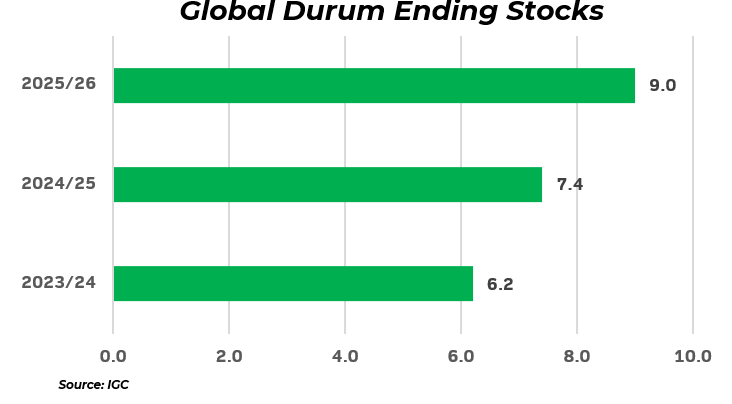
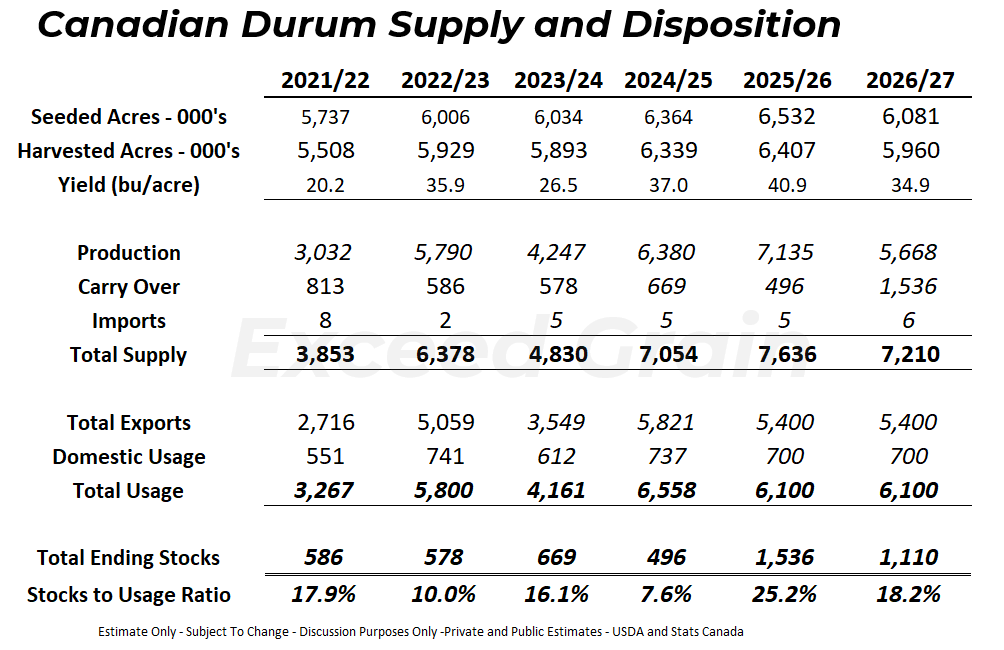
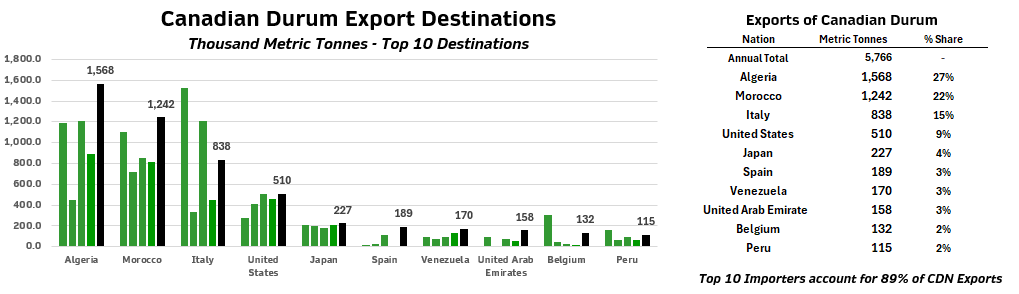
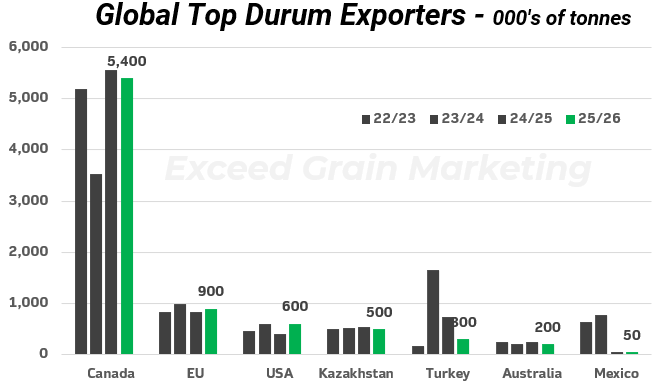
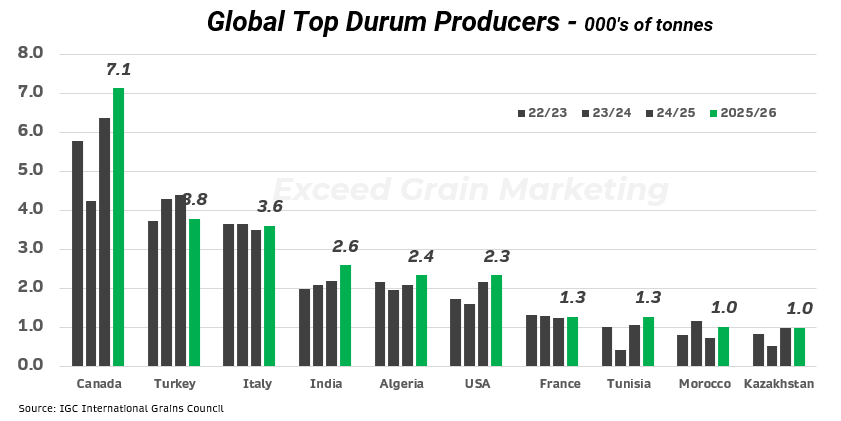
Durum markets continue trading in a much flatter and quieter tone overall compared to spring wheat. Saskatchewan durum bids generally remain in the $7.60 to $8.00 range with very little overall movement since the fall. The market continues facing pressure from improving crop prospects across North Africa where production conditions have improved significantly compared to recent years. The International Grains Council this week lowered Canadian durum export expectations to 5.15 million tonnes compared to 5.5 million tonnes last year and 5.6 million tonnes the year prior as stronger North African production is expected to reduce import demand into key Canadian export markets later this season.
At this stage, meaningful upside in durum likely requires either a larger Canadian production issue or weather concerns developing in other major exporting regions later this summer.W
What to Watch For In Wheat Markets:
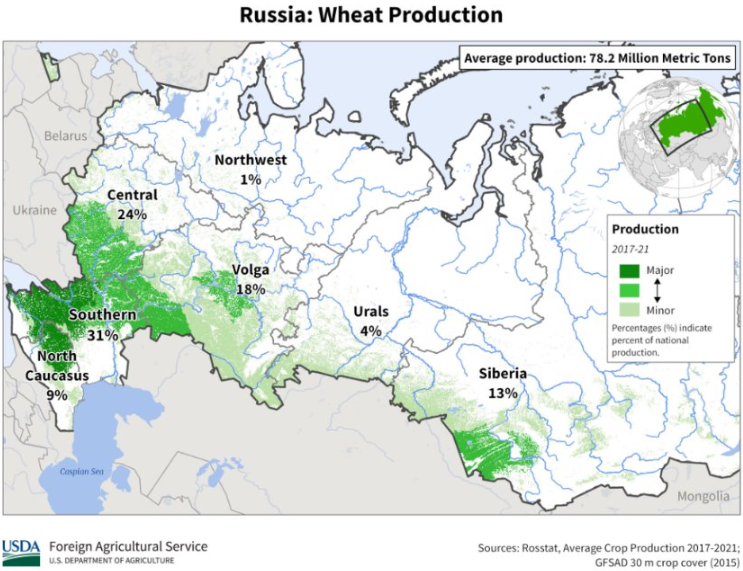
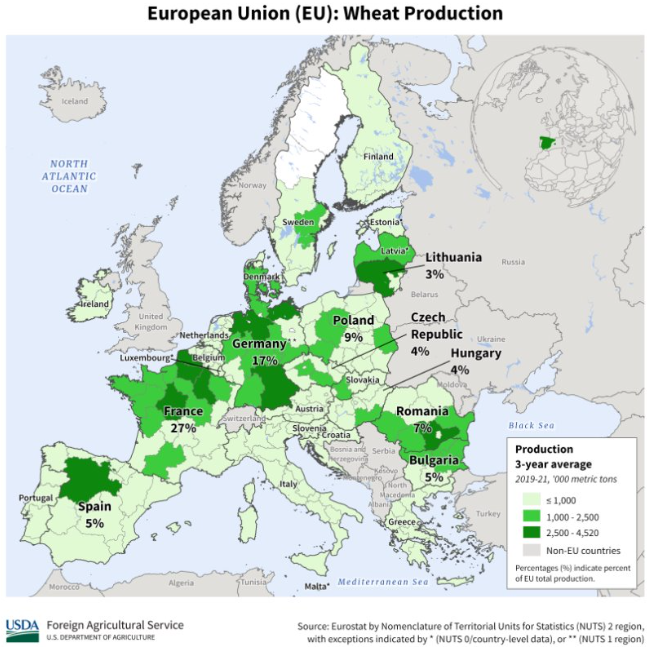
- Global Weather Markets: Trade remains hyper focused on weather across the U.S. winter wheat belt, Western Canada, the European Union and Black Sea region. U.S. winter wheat conditions remain historically poor at just 27% good to excellent while Canadian spring wheat planting delays continue supporting Minneapolis futures. Poland and portions of Ukraine had some recent rainfall after trending dry earlier this spring, while Russia’s spring wheat regions continue facing cool and wet planting conditions similar to parts of Western Canada.
- Canadian Planting Progress: Saskatchewan remains the slowest seeded province overall with many northern spring wheat regions still significantly behind normal pace. The next two weeks will be critical as producers push to advance seeding before later planting dates begin introducing greater frost and maturity risk later this fall.
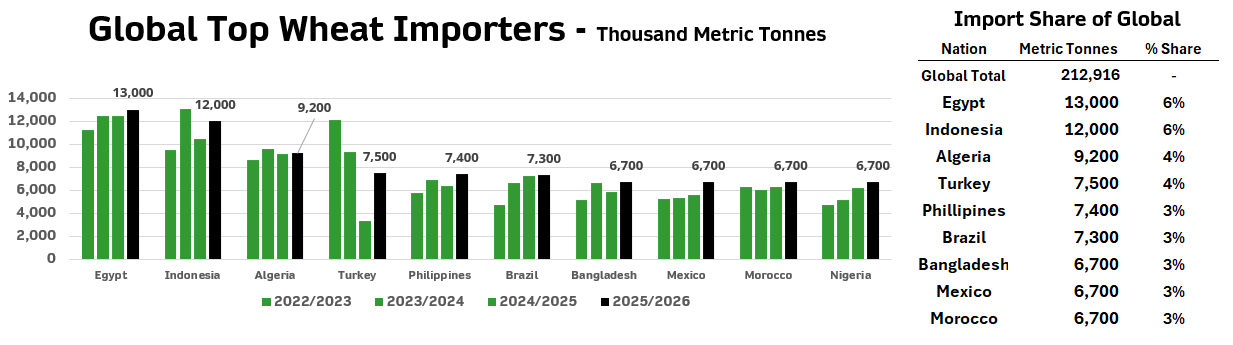
- North African and EU Durum Production: Durum crops across North Africa continue looking very strong overall with harvest beginning and expected to continue through June. Algeria, Morocco and Tunisia are all projected to see much larger crops year over year which is expected to reduce import demand for Canadian durum. This has kept Canadian durum values relatively flat despite strength in broader wheat markets.
- Canadian Durum Export Outlook: The International Grains Council this week lowered Canadian durum export expectations to 5.15 million tonnes compared to 5.5 million tonnes last year and 5.6 million tonnes the year prior. Larger North African production remains the primary reason for reduced export expectations.
- Global Wheat Competitiveness: Canadian wheat continues pricing competitively into export channels compared to similar quality origins globally. While export pace has slowed seasonally, overall Canadian wheat exports remain ahead of last year and continue helping underpin prairie cash bids


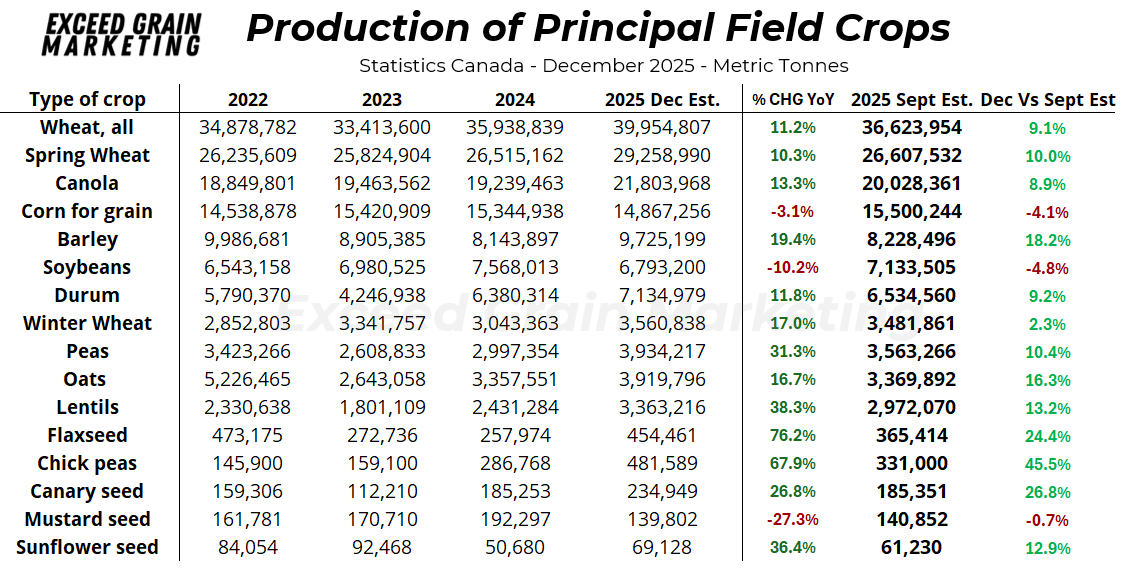


Oat markets continue trading in a relatively quiet tone overall, however values have improved modestly from winter lows as the market becomes increasingly aware of potential acreage reductions across Western Canada. Central Saskatchewan oat bids have recovered back toward the $3.50 range after spending much of the winter closer to the low $3.00 range while some Manitoba opportunities have pushed above $4.00 depending on timing and location.
Planting progress remains a major story in oats right now. Saskatchewan continues to sit well behind normal pace overall and many producers continue prioritizing canola, wheat and barley ahead of oats given stronger economics in competing crops at current values. Producer reports continue suggesting oat acreage could fall significantly this season, particularly in Manitoba where corn and wheat continue pulling acres away from oats. If delays continue deeper into late May and early June, oats could become one of the crops that simply loses intended acreage.
The oat market has also found some underlying support from Canadian stocks data. While total oat production last season increased significantly year over year, ending stocks came in lower than many in the trade anticipated. The numbers suggest stronger disappearance than expected and overall oat supply and disposition does not appear nearly as burdensome as several other Canadian crops.
Despite the recent recovery in values, oat economics still remain less attractive relative to many competing crops which continues limiting producer enthusiasm for expanding acreage. However, if seeded area falls sharply while demand remains relatively stable, the market could become much more weather sensitive later this summer.

Barley markets continue holding a firm tone overall with old crop feed barley bids still trading above the $6.00 range in many areas. Old crop malt values remain very close to feed barley prices as domestic maltsters appear to have covered most nearby needs. New crop feed barley bids are generally above $5.25 while malt opportunities are only carrying roughly a $0.75 premium in many cases.
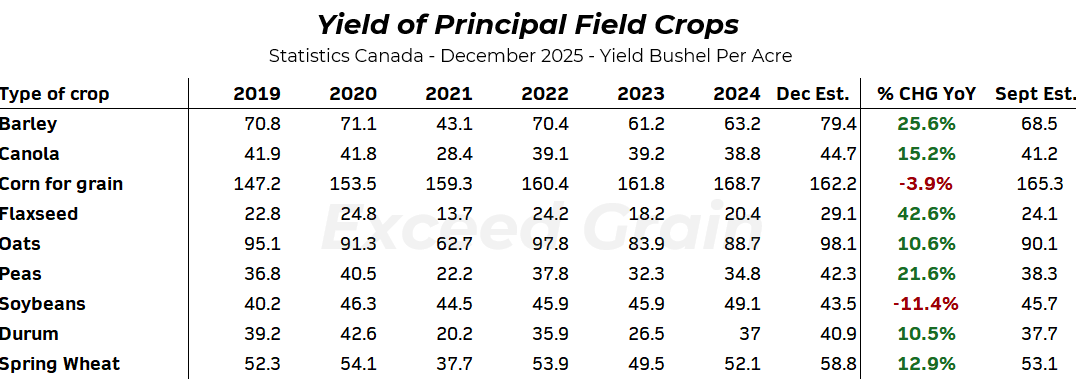
Canadian barley acreage is expected to increase roughly 5% year over year and could climb even higher depending on how planting progresses through late May. Statistics Canada also revised Canadian barley production estimates higher recently.
Despite larger acreage expectations, exports continue running very strong at roughly 70% ahead of last year with Canadian barley pricing competitively into global feed markets. Planting delays across portions of Saskatchewan remain supportive near term, particularly in northern growing regions still dealing with cool and wet conditions.

Flax markets continue trading in a relatively quiet tone overall with expectations for Canadian flax acreage up roughly 20% to 21% year over year. However, acreage estimates remain somewhat questionable now that prices have softened from earlier highs and other crop economics remain more attractive in many regions.
Canadian flax supplies are currently viewed as relatively comfortable overall with larger Kazakhstan production also adding pressure to global balance sheets. Stocks-to-usage projections for Canadian flax remain fairly large unless some stronger export demand unexpectedly develops later in the crop year.
Recent strength in vegetable oil markets has provided some modest support to flax values, however the larger crop coming out of Kazakhstan is expected to keep global flax prices relatively contained for now.

Canary seed markets continue trading under pressure overall with Canadian ending stocks projected near 171,000 tonnes which is considered a very heavy carryout for the market. Current values remain in the low $0.20 per pound range, well below the $0.30 levels seen prior to spring seeding last year. The weaker pricing environment is expected to result in a meaningful drop in acreage for 2026 as producers shift toward crops with stronger economics.
Despite the large carryout projections, canary seed markets can sometimes behave differently than traditional row crops as producers are often willing to store the crop longer term rather than move it as an immediate cashflow commodity. This tends to keep inventories in tighter hands and can limit how aggressively ending stocks alone pressure the market. Canary seed bids have improved modestly over the past few weeks, however overall market tone remains relatively soft given the comfortable supply situation.

Pea markets continue trading in a relatively flat and comfortable tone overall with domestic yellow pea bids generally around the $8.00 per bushel range. New crop bids are also not showing much aggressiveness at this point with most opportunities remaining near that same $8.00 area.
The market continues facing expectations for a relatively large carryout moving into the next crop year and stronger export demand will likely be needed to tighten the balance sheet meaningfully. China remains the key demand factor the market continues watching as additional Chinese buying would be needed to help absorb larger available supplies.
Foreign yellow pea values have also strengthened modestly recently which has helped support the overall market and allowed Canadian bids to stabilize around current levels. Pulse acreage overall is still expected to decline year over year across Western Canada as producers continue favoring stronger economics in competing crops.


Lentil markets continue holding a relatively steady tone overall with red lentil bids generally in the $0.26 to $0.27 per pound range while large green lentils continue trading closer to the $0.25 area. New crop red lentil interest has also been surfacing around the $0.25 per pound mark as buyers begin working coverage for the upcoming crop year.
The lentil market continues balancing expectations for burdensome Canadian ending stocks, particularly in green lentils, against lower acreage expectations across parts of North America. U.S. lentil seeded area is expected to decline roughly 22% year over year which could help tighten North American supply somewhat moving forward.
Prairie planting progress for lentils has generally been advancing at a reasonable pace overall. Parts of southern Saskatchewan lentil country received some beneficial rains this week following earlier dryness and extreme winds that had been creating some concern around establishment conditions. Forecasts continue calling for warmer temperatures moving forward with scattered thunderstorm activity remaining in the outlook.
Overall, lentil markets remain relatively rangebound for now with the trade continuing to monitor final seeded acreage, export demand and growing season weather through early summer.
Soybean markets traded firmer earlier this week following reports that China could purchase roughly $17 billion of U.S. agricultural goods, however markets lost momentum later in the week as traders reduced exposure heading into the U.S. Memorial Day long weekend. Manitoba new crop soybean bids continue trading around the $14.00 range with producers still able to find some marketing opportunities at times depending on delivery period and location.
Canadian soybean export pace has remained relatively strong overall this crop year, although movement typically begins slowing seasonally at this point in the year. Manitoba remains the primary focus for Canadian soybean pricing and export movement as the province continues dominating Canadian soybean production.
Markets are now beginning to shift their focus more heavily toward U.S. weather and crop development for direction moving into the summer months. U.S. planting progress overall has advanced well with no major weather threats currently developing across the Corn Belt. Earlier in the month, markets were disappointed that the U.S.-China trade meetings held May 13th through 15th failed to secure any major confirmed soybean purchase agreements, although markets did receive some support this week from broader optimism surrounding potential future Chinese agricultural buying.

Corn markets continue trading in a relatively stable tone overall with Manitoba cash corn values generally around the $5.75 range for both nearby and new crop opportunities. Fall delivery bids continue carrying a slight premium which suggests the market remains relatively comfortable with current stock levels and is not aggressively chasing nearby supplies at this point.
Feed grain supplies across Manitoba remain more abundant overall compared to recent years with stronger corn production helping keep feed markets relatively well supplied. Domestic demand remains steady, however the market is not currently facing any major supply concerns locally.
Globally though, corn balance sheets remain tighter than they were just a few years ago. The USDA May report projected global corn ending stocks below 280 million tonnes compared to roughly 314 million tonnes seen only a few seasons back. Despite that, market direction moving forward will remain heavily dependent on the upcoming U.S. corn crop and summer weather conditions across the Corn Belt.
U.S. planting progress overall has advanced well so far with no major production threats developing yet. As planting wraps up, markets will increasingly shift focus toward weather, crop ratings and yield potential through June and July.


Our market intelligence reports incorporate information obtained from various third-party sources, government publications, and other outlets. While we endeavor to maintain the highest standards of accuracy and integrity in our reports, we acknowledge that the information provided may contain inadvertent errors or omissions. As such, we accept no liability for any inaccuracies or missing information in the data presented. Furthermore, these reports are not intended to serve as standalone investment or financial advice. We strongly advise that any financial or investment decisions be made in consultation with a professional market advisor. Reliance on the content or forecasting provided within of our reports for making financial decisions without such professional advice is at the sole risk of the user.